Buy smtebooks.eu ?
We are moving the project
smtebooks.eu .
Are you interested in purchasing the domain
smtebooks.eu ?
domain@kv-gmbh.de · 0541-91531010
Buy smtebooks.eu ?
Are we more Homo sapiens or Homo deus?
As of now, we are more Homo sapiens, as we are still primarily driven by our biological and evolutionary instincts. However, with the rapid advancements in technology and the potential for genetic engineering, some argue that we are on the path to becoming more like Homo deus, or "god-man," as described by Yuval Noah Harari in his book of the same name. This concept suggests that humans may eventually transcend our current limitations and become more god-like in our abilities and capabilities. Ultimately, the answer to this question may depend on the trajectory of future technological and biological developments. **
Is Homo neanderthalensis a subspecies of Homo sapiens?
No, Homo neanderthalensis is not a subspecies of Homo sapiens. Neanderthals and modern humans are separate species that evolved from a common ancestor. Neanderthals lived in Europe and Asia, while Homo sapiens originated in Africa. Although there is evidence of interbreeding between the two species, they are distinct and separate branches of the human evolutionary tree. **

Similar search terms for Homo
Top-Angebote
Products related to Homo:
-
Arcturus The Classic Friedrich Nietzsche Collection 5 Books Box Set - Ecce Homo, Beyond Good and Evil, Thus Spake Zarathustra, Human All Too Human and MoreThis handsome five-volume box set brings together the classic works Friedrich Nietzsche, presented with striking contemporary cover designs. One of the most prominent thinkers of the 19th century, Nietzsche was a cultural critic and philosopher whose theories on truth, morality, nihilism and the meaning of existence have had enormous influence on Western philosophy. This box set contains his most prominent works, including: - Human, All Too Human - Thus Spake Zarathustra - Beyond Good and Evil - On the Genealogy of Morals - Ecce Homo These influential essay collections have profoundly shaped modern philosophy and remain as pertinent now as they ever were.16,99 £*Shipping: 2,99 £Secure redirect to the provider
-
Learning Resources Switcheroo Coding CrewJoin the Switcheroo Coding Crew for challenge-solving, obstacle-evading, screen-free rescue missions! Preschoolers save the day the coding way with this three-in-one rescue robot who's ready for early STEM fun! Snap on a vehicle shell to transform...59,99 $*Shipping: 0,00 $Secure redirect to the provider
-
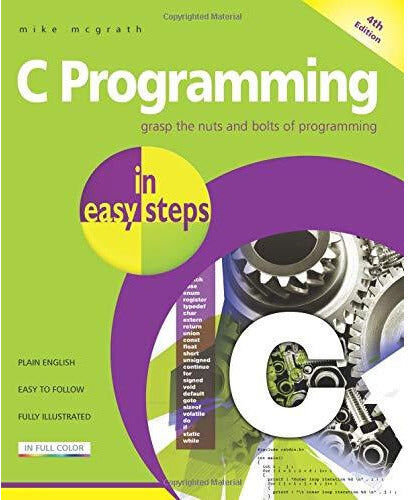
In Easy Steps Limited C Programming In Easy Steps 4th EditionC Programming in easy steps has an easy-to-follow style that will appeal to anyone who wants to begin programming in C, from programmers moving from another programming language, to the student who is studying C programming at school or college, or to those seeking a career in computing who need a fundamental understanding of procedural programming. C Programming in easy steps begins by explaining how to download and install a free C compiler so that you can quickly begin to create your own executable programs by copying the book's examples. You need have no previous knowledge of any programming language so it's ideal for the newcomer to computer programming. Each chapter builds your knowledge of C. C Programming in easy steps contains separate chapters on the major features of the C language. There are complete example programs that demonstrate each aspect of C together with screenshots that illustrate the output when that program has been executed. The sample code provided all has colored syntax-highlighting for clearer understanding. By the end of this book you will have gained a sound understanding of the C language and be able to write your own C programs and compile them into executable files that can be run on any compatible computer. Fully updated and revised since the third edition, which was published in April 2009.5,49 £*Shipping: 2,99 £Secure redirect to the provider
-
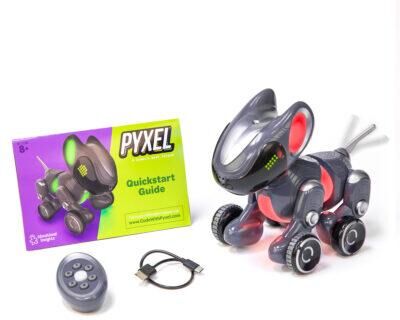
Learning Resources Pyxel The Coding PetKids use a computer or tablet to program this four-legged friend, then send their commands to the included remote to make the pet move, “talk”, and change facial expressions. Includes Coding Pet, user interface, and remote-activator unit. Pyxel The...124,99 $*Shipping: 0,00 $Secure redirect to the provider


-
What is the connection between Homo Faber and technology?
Homo Faber explores the relationship between humans and technology, highlighting how advancements in technology can both enhance and complicate human experiences. The protagonist, Walter Faber, is an engineer who places great trust in technology to solve problems and improve his life. However, the novel also shows how technology can lead to isolation, dehumanization, and a loss of connection with nature. Overall, Homo Faber raises important questions about the impact of technology on human existence and the need to find a balance between technological progress and maintaining our humanity. **
-
What is the difference between Homo erectus and Homo ergaster?
Homo erectus and Homo ergaster are both extinct species of early humans, but they have some key differences. Homo ergaster is believed to be an ancestor of Homo erectus and is considered to be slightly older, dating back around 1.9 million years ago. Homo ergaster is thought to have a more slender build and longer legs compared to Homo erectus. Additionally, Homo ergaster is believed to have originated in Africa, while Homo erectus is known to have migrated to other parts of the world. **
-
What is the difference between Homo oeconomicus and Homo sapiens?
Homo oeconomicus is a theoretical concept in economics that describes humans as rational, self-interested decision-makers who always act in a way that maximizes their own utility. This model assumes that individuals have perfect information, make decisions based on cost-benefit analysis, and have consistent preferences over time. On the other hand, Homo sapiens refers to actual human beings, who are influenced by emotions, social norms, and cognitive biases in their decision-making. Unlike Homo oeconomicus, Homo sapiens are not always rational and may not always act in their own self-interest. This difference highlights the limitations of the Homo oeconomicus model in capturing the complexity of human behavior. **
-
What is the difference between Homo erectus and Homo habilis?
Homo erectus and Homo habilis are both early human species, but there are several key differences between them. Homo habilis, which lived around 2.4 to 1.4 million years ago, was smaller in stature and had a smaller brain size compared to Homo erectus. Homo habilis is also believed to have been more adept at using tools, which is reflected in its name, meaning "handy man." On the other hand, Homo erectus, which lived around 1.9 million to 143,000 years ago, had a larger brain size and was the first human species to migrate out of Africa. Additionally, Homo erectus is believed to have had a more advanced ability to control fire and may have been the first human species to use language. **

What is the difference between Homo oecologicus and Homo oeconomicus?
Homo oecologicus and Homo oeconomicus are two different conceptual models used to understand human behavior. Homo oecologicus is a theoretical model that views humans as being inherently connected to and dependent on their natural environment. This model emphasizes the importance of sustainability and the need to consider the ecological impact of human actions. On the other hand, Homo oeconomicus is a model that views humans as rational, self-interested actors who make decisions based on maximizing their own utility or economic gain. This model is often used in economics and assumes that individuals make decisions based on cost-benefit analysis and the pursuit of their own self-interest. In summary, the main difference between the two models is their focus - Homo oecologicus emphasizes the ecological impact of human behavior, while Homo oeconomicus focuses on the economic rationality of human decision-making. **
What are examples of the Homo oeconomicus and the Homo sociologicus?
The Homo oeconomicus is a theoretical concept in economics that describes a rational, self-interested individual who makes decisions based on maximizing their own utility or economic well-being. An example of Homo oeconomicus might be a person who always seeks to maximize their financial gains, makes decisions based on cost-benefit analysis, and acts in their own self-interest without considering the impact on others. On the other hand, the Homo sociologicus is a theoretical concept in sociology that describes an individual who is influenced by social norms, values, and the expectations of their community. An example of Homo sociologicus might be a person who makes decisions based on the expectations and norms of their social group, prioritizes the well-being of the community over individual gain, and is influenced by social pressures and cultural values in their decision-making. **
Top-Angebote
Products related to Homo:
-
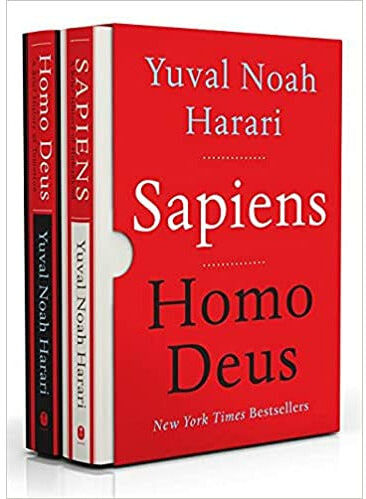
books4people BOX MISSING - Sapiens/Homo Deus Box SetDiscover humanity's past and its future in this in this special box set featuring the bestselling Sapiens--a reading pick of President Barack Obama, Bill Gates, and Mark Zuckerberg--and its acclaimed companion Homo Deus.32,99 £*Shipping: 2,99 £Secure redirect to the provider
-
Penguin Becky Albertalli 4 Books Collection Set (Simon vs. the Homo Sapiens Agenda, Love Simon, Leah on the Offbeat, The Upside of Unrequited)Simon vs. the Homo Sapiens Agenda Straight people should have to come out too. And the more awkward it is, the better. Simon Spier is sixteen and trying to work out who he is - and what he's looking for. But when one of his emails to the very distracting Blue falls into the wrong hands, things get all kinds of complicated. Because, for Simon, falling for Blue is a big deal ... It's a holy freaking huge awesome deal. Love Simon Straight people should have to come out too. And the more awkward it is, the better. Simon Spier is sixteen and trying to work out who he is - and what he's looking for. But when one of his emails to the very distracting Blue falls into the wrong hands, things get all kinds of complicated. Because, for Simon, falling for Blue is a big deal ... It's a holy freaking huge awesome deal. Leah on the Offbeat When it comes to drumming, Leah Burke is usually on beat- but real life isn't always so rhythmic. The only child of a single mum, and her life is less privileged than her friends. Her mum knows she's bisexual, but Leah hasn't mustered the courage to tell her friends. Not even her openly gay BFF, Simon. Prom and college are on the horizon, and tensions are running high. Can Leah still strike the right note, when the people she loves are fighting? And how can she cope knowing that she might love one of her friends more than she ever intended? The Upside of Unrequited I don't entirely understand how anyone gets a boyfriend. Or a girlfriend. It just seems like the most impossible odds. A perfect alignment of feelings and circumstances . . . Molly Peskin-Suso knows all about unrequited love. No matter how many times her twin sister, Cassie, tells her to woman up, Molly is always careful. Better to be careful than be hurt. But when Cassie gets a new girlfriend who comes with a cute hipster-boy sidekick, everything changes. Will is funny, flirtatious and basically the perfect first boyfriend. There's only one problem: Molly's coworker, Reid: the awkward Tolkien superfan she could never fall for . . . right?24,99 £*Shipping: 2,99 £Secure redirect to the provider
-
Arcturus The Classic Friedrich Nietzsche Collection 5 Books Box Set - Ecce Homo, Beyond Good and Evil, Thus Spake Zarathustra, Human All Too Human and MoreThis handsome five-volume box set brings together the classic works Friedrich Nietzsche, presented with striking contemporary cover designs. One of the most prominent thinkers of the 19th century, Nietzsche was a cultural critic and philosopher whose theories on truth, morality, nihilism and the meaning of existence have had enormous influence on Western philosophy. This box set contains his most prominent works, including: - Human, All Too Human - Thus Spake Zarathustra - Beyond Good and Evil - On the Genealogy of Morals - Ecce Homo These influential essay collections have profoundly shaped modern philosophy and remain as pertinent now as they ever were.16,99 £*Shipping: 2,99 £Secure redirect to the provider
-
Learning Resources Switcheroo Coding CrewJoin the Switcheroo Coding Crew for challenge-solving, obstacle-evading, screen-free rescue missions! Preschoolers save the day the coding way with this three-in-one rescue robot who's ready for early STEM fun! Snap on a vehicle shell to transform...59,99 $*Shipping: 0,00 $Secure redirect to the provider
-
Are we more Homo sapiens or Homo deus?
As of now, we are more Homo sapiens, as we are still primarily driven by our biological and evolutionary instincts. However, with the rapid advancements in technology and the potential for genetic engineering, some argue that we are on the path to becoming more like Homo deus, or "god-man," as described by Yuval Noah Harari in his book of the same name. This concept suggests that humans may eventually transcend our current limitations and become more god-like in our abilities and capabilities. Ultimately, the answer to this question may depend on the trajectory of future technological and biological developments. **
-
Is Homo neanderthalensis a subspecies of Homo sapiens?
No, Homo neanderthalensis is not a subspecies of Homo sapiens. Neanderthals and modern humans are separate species that evolved from a common ancestor. Neanderthals lived in Europe and Asia, while Homo sapiens originated in Africa. Although there is evidence of interbreeding between the two species, they are distinct and separate branches of the human evolutionary tree. **
-
What is the connection between Homo Faber and technology?
Homo Faber explores the relationship between humans and technology, highlighting how advancements in technology can both enhance and complicate human experiences. The protagonist, Walter Faber, is an engineer who places great trust in technology to solve problems and improve his life. However, the novel also shows how technology can lead to isolation, dehumanization, and a loss of connection with nature. Overall, Homo Faber raises important questions about the impact of technology on human existence and the need to find a balance between technological progress and maintaining our humanity. **
-
What is the difference between Homo erectus and Homo ergaster?
Homo erectus and Homo ergaster are both extinct species of early humans, but they have some key differences. Homo ergaster is believed to be an ancestor of Homo erectus and is considered to be slightly older, dating back around 1.9 million years ago. Homo ergaster is thought to have a more slender build and longer legs compared to Homo erectus. Additionally, Homo ergaster is believed to have originated in Africa, while Homo erectus is known to have migrated to other parts of the world. **
Similar search terms for Homo
-
In Easy Steps Limited C Programming In Easy Steps 4th EditionC Programming in easy steps has an easy-to-follow style that will appeal to anyone who wants to begin programming in C, from programmers moving from another programming language, to the student who is studying C programming at school or college, or to those seeking a career in computing who need a fundamental understanding of procedural programming. C Programming in easy steps begins by explaining how to download and install a free C compiler so that you can quickly begin to create your own executable programs by copying the book's examples. You need have no previous knowledge of any programming language so it's ideal for the newcomer to computer programming. Each chapter builds your knowledge of C. C Programming in easy steps contains separate chapters on the major features of the C language. There are complete example programs that demonstrate each aspect of C together with screenshots that illustrate the output when that program has been executed. The sample code provided all has colored syntax-highlighting for clearer understanding. By the end of this book you will have gained a sound understanding of the C language and be able to write your own C programs and compile them into executable files that can be run on any compatible computer. Fully updated and revised since the third edition, which was published in April 2009.5,49 £*Shipping: 2,99 £Secure redirect to the provider
-
Learning Resources Pyxel The Coding PetKids use a computer or tablet to program this four-legged friend, then send their commands to the included remote to make the pet move, “talk”, and change facial expressions. Includes Coding Pet, user interface, and remote-activator unit. Pyxel The...124,99 $*Shipping: 0,00 $Secure redirect to the provider
-
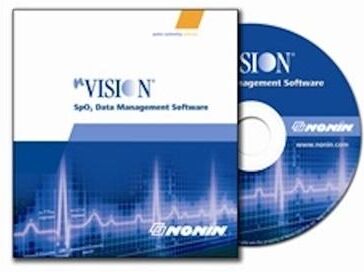
Nonin Medical nVision Data Management Software for Oximetry Screening""" nVision SpO2 Data Management Software Nonin's innovation in pulse oximetry has led to the development of an easy oximetry reporting solution nVISION. Designed to provide effortless viewing, professional analysis, report generation and reliable..."441,00 $*Shipping: 0,00 $Secure redirect to the provider
-
Mac Paw CleanMyMac X - Mac Cleaning and Optimisation Software - Lifetime LicenceCleanMyMac X - Mac Cleaning and Optimisation Software Lifetime Licence Clean, Optimise and Protect Your Mac with CleanMyMac X CleanMyMac X is the best cleaning and optimisation software for Mac, designed to free up disk space, speed up macOS and protect your computer from malware and viruses. Chosen by millions of users worldwide, CleanMyMac X is the professional solution to keep your MacBook, iMac or Mac Mini in perfect condition. Why Choose CleanMyMac X? Deep Cleaning the Mac Remove junk files, system caches, obsolete logs and temporary files that take up valuable disk space. CleanMyMac X can free up tens of gigabytes with a single click, optimising the performance of your Mac. MacOS Performance Optimisation Speed up your Mac by eliminating applications that start automatically, unnecessary background processes and scripts that slow down the system. Ideal for Slow Mac or with performance problems. Antivirus and Antimalware Protection Full scan to detect and remove Mac viruses, adware, spyware and ransomware . Constantly updated database to protect your device from the latest cyber threats. Complete Uninstallation of Applications It completely removes unwanted apps along with all residual files, extensions and hidden preferences that other uninstallation methods leave on the system. Main features of CleanMyMac X ✓ Smart Scan - Automatic scanning that analyses cleanliness, protection and speed ✓ Freeing Disk Space - Finds and removes duplicate files, heavy email attachments and forgotten downloads ✓ Software Update - Keep all your applications up-to-date from a single interface ✓ System Monitoring - Menu bar widget to check CPU, RAM, battery and disk space in real time ✓ MacOS maintenance - Automatic scripts to optimise databases, repair permissions and free RAM ✓ Privacy and Security - Delete browsing history, cookies and digital traces Compatibility and Requirements Operating System macOS 10.13 High Sierra or later Compatible with : MacBook Air, MacBook Pro, iMac, Mac Mini, Mac Studio, Mac Pro Support macOS Sonoma, Ventura, Monterey, Big Sur, Catalina, Mojave Certified and Safe CleanMyMac X is Apple Certified with notarised signatures, guaranteeing maximum security and reliability. Developed by MacPaw, a leading Mac software company since 2008. Buy CleanMyMac X - Lifetime Licence Get the CleanMyMac X lifetime licence to protect and optimise your Mac. Available as a single or multi-device version. Updates included and technical support guaranteed. Keywords : Mac cleaning, macOS optimisation, Mac antivirus, free up Mac space, speed up Mac, Mac maintenance software, clean Mac disk, remove Mac malware77,81 £*Shipping: 0,00 £Secure redirect to the provider
-
What is the difference between Homo oeconomicus and Homo sapiens?
Homo oeconomicus is a theoretical concept in economics that describes humans as rational, self-interested decision-makers who always act in a way that maximizes their own utility. This model assumes that individuals have perfect information, make decisions based on cost-benefit analysis, and have consistent preferences over time. On the other hand, Homo sapiens refers to actual human beings, who are influenced by emotions, social norms, and cognitive biases in their decision-making. Unlike Homo oeconomicus, Homo sapiens are not always rational and may not always act in their own self-interest. This difference highlights the limitations of the Homo oeconomicus model in capturing the complexity of human behavior. **
-
What is the difference between Homo erectus and Homo habilis?
Homo erectus and Homo habilis are both early human species, but there are several key differences between them. Homo habilis, which lived around 2.4 to 1.4 million years ago, was smaller in stature and had a smaller brain size compared to Homo erectus. Homo habilis is also believed to have been more adept at using tools, which is reflected in its name, meaning "handy man." On the other hand, Homo erectus, which lived around 1.9 million to 143,000 years ago, had a larger brain size and was the first human species to migrate out of Africa. Additionally, Homo erectus is believed to have had a more advanced ability to control fire and may have been the first human species to use language. **
-
What is the difference between Homo oecologicus and Homo oeconomicus?
Homo oecologicus and Homo oeconomicus are two different conceptual models used to understand human behavior. Homo oecologicus is a theoretical model that views humans as being inherently connected to and dependent on their natural environment. This model emphasizes the importance of sustainability and the need to consider the ecological impact of human actions. On the other hand, Homo oeconomicus is a model that views humans as rational, self-interested actors who make decisions based on maximizing their own utility or economic gain. This model is often used in economics and assumes that individuals make decisions based on cost-benefit analysis and the pursuit of their own self-interest. In summary, the main difference between the two models is their focus - Homo oecologicus emphasizes the ecological impact of human behavior, while Homo oeconomicus focuses on the economic rationality of human decision-making. **
-
What are examples of the Homo oeconomicus and the Homo sociologicus?
The Homo oeconomicus is a theoretical concept in economics that describes a rational, self-interested individual who makes decisions based on maximizing their own utility or economic well-being. An example of Homo oeconomicus might be a person who always seeks to maximize their financial gains, makes decisions based on cost-benefit analysis, and acts in their own self-interest without considering the impact on others. On the other hand, the Homo sociologicus is a theoretical concept in sociology that describes an individual who is influenced by social norms, values, and the expectations of their community. An example of Homo sociologicus might be a person who makes decisions based on the expectations and norms of their social group, prioritizes the well-being of the community over individual gain, and is influenced by social pressures and cultural values in their decision-making. **
* All prices are inclusive of VAT and, if applicable, plus shipping costs. The offer information is based on the details provided by the respective shop and is updated through automated processes. Real-time updates do not occur, so deviations can occur in individual cases. ** Note: Parts of this content were created by AI.