Buy smtebooks.eu ?
We are moving the project
smtebooks.eu .
Are you interested in purchasing the domain
smtebooks.eu ?
domain@kv-gmbh.de · 0541-91531010
Buy smtebooks.eu ?
What is proton donation and proton acceptance in chemistry?
Proton donation and proton acceptance are key concepts in acid-base chemistry. Proton donation refers to the transfer of a hydrogen ion (proton) from one substance to another. This typically occurs when an acid donates a proton to a base. Proton acceptance, on the other hand, involves the acceptance of a proton by a substance, often a base, leading to the formation of a new chemical species. These processes are fundamental to understanding the behavior of acids and bases in chemical reactions. **
What is meant by proton donors and proton acceptors?
Proton donors are substances that can donate a proton (H+) to another substance. This typically involves the release of a hydrogen ion. Proton acceptors, on the other hand, are substances that can accept a proton from another substance. This typically involves the uptake of a hydrogen ion. In the context of acid-base reactions, proton donors are acids, while proton acceptors are bases. **


Similar search terms for Proton
Top-Angebote
Products related to Proton:
-
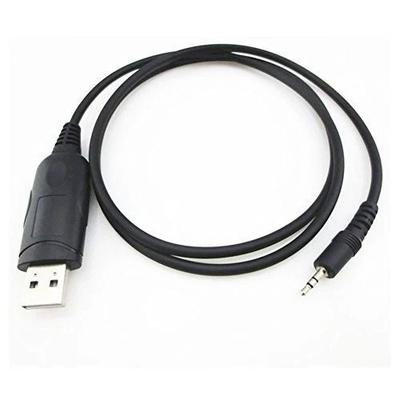
Motorola Programming Cable Motorola Programming CableStaying connected starts with gear you can trust. This 1 pc of Motorola CP200 programming cable makes it easier to program compatible radios quickly and confidently, whether you manage a fleet or maintain a few essential units. Designed for users...49,97 $*Shipping: 0,00 $Secure redirect to the provider
-
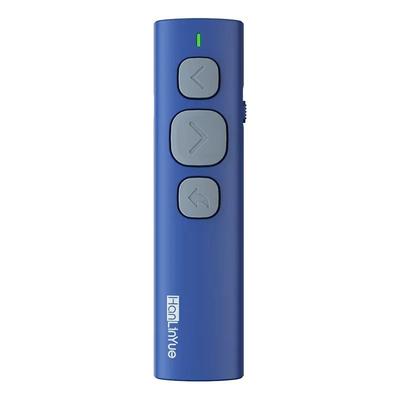
Bluetooth Page Turner Remote For Ebooks And Video Scrolling blueEnjoy handsfree reading, swiping, and scrolling with this compact Bluetooth Page Turner Remote. Whether you're flipping through an ebook, scrolling social media, or watching short videos, this wireless remote gives you fingertip control from a...42,97 $*Shipping: 0,00 $Secure redirect to the provider
-
Learning Resources Switcheroo Coding CrewJoin the Switcheroo Coding Crew for challenge-solving, obstacle-evading, screen-free rescue missions! Preschoolers save the day the coding way with this three-in-one rescue robot who's ready for early STEM fun! Snap on a vehicle shell to transform...59,99 $*Shipping: 0,00 $Secure redirect to the provider
-
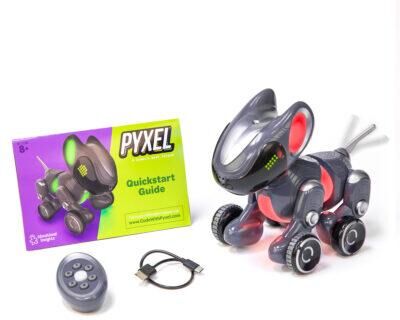
Learning Resources Pyxel The Coding PetKids use a computer or tablet to program this four-legged friend, then send their commands to the included remote to make the pet move, “talk”, and change facial expressions. Includes Coding Pet, user interface, and remote-activator unit. Pyxel The...124,99 $*Shipping: 0,00 $Secure redirect to the provider

-
What determines a proton donor and a proton acceptor?
A proton donor is a substance that can release a proton (H+) in a chemical reaction, while a proton acceptor is a substance that can accept a proton. This ability is determined by the presence of a hydrogen atom with a positive charge (H+) in the molecule. In general, substances with a lone pair of electrons, such as a hydroxide ion (OH-) or an amine group (NH2), can act as proton acceptors, while substances with a hydrogen atom bonded to an electronegative atom, such as a hydrochloric acid (HCl) or acetic acid (CH3COOH), can act as proton donors. **
-
Why are carboxylic acids proton donors and amines proton acceptors?
Carboxylic acids are proton donors because they contain a highly electronegative oxygen atom that can stabilize the resulting carboxylate anion by delocalizing the negative charge. Amines, on the other hand, are proton acceptors because they contain a lone pair of electrons on the nitrogen atom that can readily accept a proton to form a positively charged ammonium ion. This ability to donate or accept protons is due to the presence of functional groups in these molecules that can easily gain or lose a hydrogen ion in solution. **
-
Are there only proton-proton collisions in the particle accelerator?
No, there are not only proton-proton collisions in the particle accelerator. Particle accelerators can also collide protons with other particles such as electrons or heavy ions like lead or gold. These collisions are important for studying different aspects of particle physics and for exploring the fundamental forces and particles that make up the universe. By colliding different types of particles, scientists can gain a better understanding of the fundamental building blocks of matter and the forces that govern their interactions. **
-
How secure is Proton?
Proton is considered to be a highly secure email service. It offers end-to-end encryption for emails, meaning that only the sender and recipient can read the contents of the messages. Proton also uses strong encryption protocols to protect user data and has a strict privacy policy that ensures user information is not shared with third parties. Additionally, Proton is based in Switzerland, known for its strong privacy laws, adding an extra layer of security for users. **


What is proton decay?
Proton decay is a theoretical process in which a proton, one of the fundamental particles that make up an atom's nucleus, decays into lighter particles. This process is predicted by some grand unified theories (GUTs) that seek to unify the electromagnetic, weak, and strong nuclear forces. If proton decay were to occur, it would have profound implications for our understanding of the fundamental forces and particles in the universe. However, despite extensive experimental efforts, proton decay has not been observed, and its theoretical prediction remains unconfirmed. **
What are proton currents?
Proton currents refer to the flow of protons, which are positively charged particles, through a medium. This flow of protons can occur in various contexts, such as in biological systems, in proton-conducting materials, or in the context of proton exchange membrane fuel cells. Proton currents are important in many physiological processes, such as the generation of energy in cells through the process of oxidative phosphorylation. In the context of proton-conducting materials and fuel cells, proton currents are important for the generation of electrical energy. **
Top-Angebote
Products related to Proton:
-
Waveshare STM8 Programmer Adapter QFP48 SWIM Development Board For MCU Programming Waveshare STM8 Programmer Adapter QFP48 SWIM Development Board For MCU ProgrammingBring confidence and precision to every programming project with the STM8 programmer adapter designed for developers, engineers, and electronics enthusiasts. This compact QFP48 programmer provides a reliable platform for programming, debugging, and...109,97 $*Shipping: 0,00 $Secure redirect to the provider
-
Jaguar Land Rover USB Diagnostic Cable For OBD Programming Key Coding & Fault Scanner For Jaguar Land RoverTake control of your vehicle diagnostics with this powerful Jaguar Land Rover diagnostic cable designed for precision and ease. Built for mechanics, car enthusiasts, and DIY users, it lets you quickly identify faults, program systems, and match keys...79,97 $*Shipping: 0,00 $Secure redirect to the provider
-
Motorola Programming Cable Motorola Programming CableStaying connected starts with gear you can trust. This 1 pc of Motorola CP200 programming cable makes it easier to program compatible radios quickly and confidently, whether you manage a fleet or maintain a few essential units. Designed for users...49,97 $*Shipping: 0,00 $Secure redirect to the provider
-
Bluetooth Page Turner Remote For Ebooks And Video Scrolling blueEnjoy handsfree reading, swiping, and scrolling with this compact Bluetooth Page Turner Remote. Whether you're flipping through an ebook, scrolling social media, or watching short videos, this wireless remote gives you fingertip control from a...42,97 $*Shipping: 0,00 $Secure redirect to the provider
-
What is proton donation and proton acceptance in chemistry?
Proton donation and proton acceptance are key concepts in acid-base chemistry. Proton donation refers to the transfer of a hydrogen ion (proton) from one substance to another. This typically occurs when an acid donates a proton to a base. Proton acceptance, on the other hand, involves the acceptance of a proton by a substance, often a base, leading to the formation of a new chemical species. These processes are fundamental to understanding the behavior of acids and bases in chemical reactions. **
-
What is meant by proton donors and proton acceptors?
Proton donors are substances that can donate a proton (H+) to another substance. This typically involves the release of a hydrogen ion. Proton acceptors, on the other hand, are substances that can accept a proton from another substance. This typically involves the uptake of a hydrogen ion. In the context of acid-base reactions, proton donors are acids, while proton acceptors are bases. **
-
What determines a proton donor and a proton acceptor?
A proton donor is a substance that can release a proton (H+) in a chemical reaction, while a proton acceptor is a substance that can accept a proton. This ability is determined by the presence of a hydrogen atom with a positive charge (H+) in the molecule. In general, substances with a lone pair of electrons, such as a hydroxide ion (OH-) or an amine group (NH2), can act as proton acceptors, while substances with a hydrogen atom bonded to an electronegative atom, such as a hydrochloric acid (HCl) or acetic acid (CH3COOH), can act as proton donors. **
-
Why are carboxylic acids proton donors and amines proton acceptors?
Carboxylic acids are proton donors because they contain a highly electronegative oxygen atom that can stabilize the resulting carboxylate anion by delocalizing the negative charge. Amines, on the other hand, are proton acceptors because they contain a lone pair of electrons on the nitrogen atom that can readily accept a proton to form a positively charged ammonium ion. This ability to donate or accept protons is due to the presence of functional groups in these molecules that can easily gain or lose a hydrogen ion in solution. **
Similar search terms for Proton
-
Learning Resources Switcheroo Coding CrewJoin the Switcheroo Coding Crew for challenge-solving, obstacle-evading, screen-free rescue missions! Preschoolers save the day the coding way with this three-in-one rescue robot who's ready for early STEM fun! Snap on a vehicle shell to transform...59,99 $*Shipping: 0,00 $Secure redirect to the provider
-
Learning Resources Pyxel The Coding PetKids use a computer or tablet to program this four-legged friend, then send their commands to the included remote to make the pet move, “talk”, and change facial expressions. Includes Coding Pet, user interface, and remote-activator unit. Pyxel The...124,99 $*Shipping: 0,00 $Secure redirect to the provider
-
SmartScroll Bluetooth Ring Remote For TikTok, EBooks & Hands Free Phone Control yellowEnjoy effortless scrolling, page turning, and video control with this sleek Bluetooth ring remote designed for modern multitaskers. Whether you're reading eBooks, recording content, streaming videos, or relaxing handsfree, this compact controller...34,97 $*Shipping: 0,00 $Secure redirect to the provider
-
Bluetooth Page Turner Remote For Ebooks And Video Scrolling whiteEnjoy handsfree reading, swiping, and scrolling with this compact Bluetooth Page Turner Remote. Whether you're flipping through an ebook, scrolling social media, or watching short videos, this wireless remote gives you fingertip control from a...42,97 $*Shipping: 0,00 $Secure redirect to the provider
-
Are there only proton-proton collisions in the particle accelerator?
No, there are not only proton-proton collisions in the particle accelerator. Particle accelerators can also collide protons with other particles such as electrons or heavy ions like lead or gold. These collisions are important for studying different aspects of particle physics and for exploring the fundamental forces and particles that make up the universe. By colliding different types of particles, scientists can gain a better understanding of the fundamental building blocks of matter and the forces that govern their interactions. **
-
How secure is Proton?
Proton is considered to be a highly secure email service. It offers end-to-end encryption for emails, meaning that only the sender and recipient can read the contents of the messages. Proton also uses strong encryption protocols to protect user data and has a strict privacy policy that ensures user information is not shared with third parties. Additionally, Proton is based in Switzerland, known for its strong privacy laws, adding an extra layer of security for users. **
-
What is proton decay?
Proton decay is a theoretical process in which a proton, one of the fundamental particles that make up an atom's nucleus, decays into lighter particles. This process is predicted by some grand unified theories (GUTs) that seek to unify the electromagnetic, weak, and strong nuclear forces. If proton decay were to occur, it would have profound implications for our understanding of the fundamental forces and particles in the universe. However, despite extensive experimental efforts, proton decay has not been observed, and its theoretical prediction remains unconfirmed. **
-
What are proton currents?
Proton currents refer to the flow of protons, which are positively charged particles, through a medium. This flow of protons can occur in various contexts, such as in biological systems, in proton-conducting materials, or in the context of proton exchange membrane fuel cells. Proton currents are important in many physiological processes, such as the generation of energy in cells through the process of oxidative phosphorylation. In the context of proton-conducting materials and fuel cells, proton currents are important for the generation of electrical energy. **
* All prices are inclusive of VAT and, if applicable, plus shipping costs. The offer information is based on the details provided by the respective shop and is updated through automated processes. Real-time updates do not occur, so deviations can occur in individual cases. ** Note: Parts of this content were created by AI.